

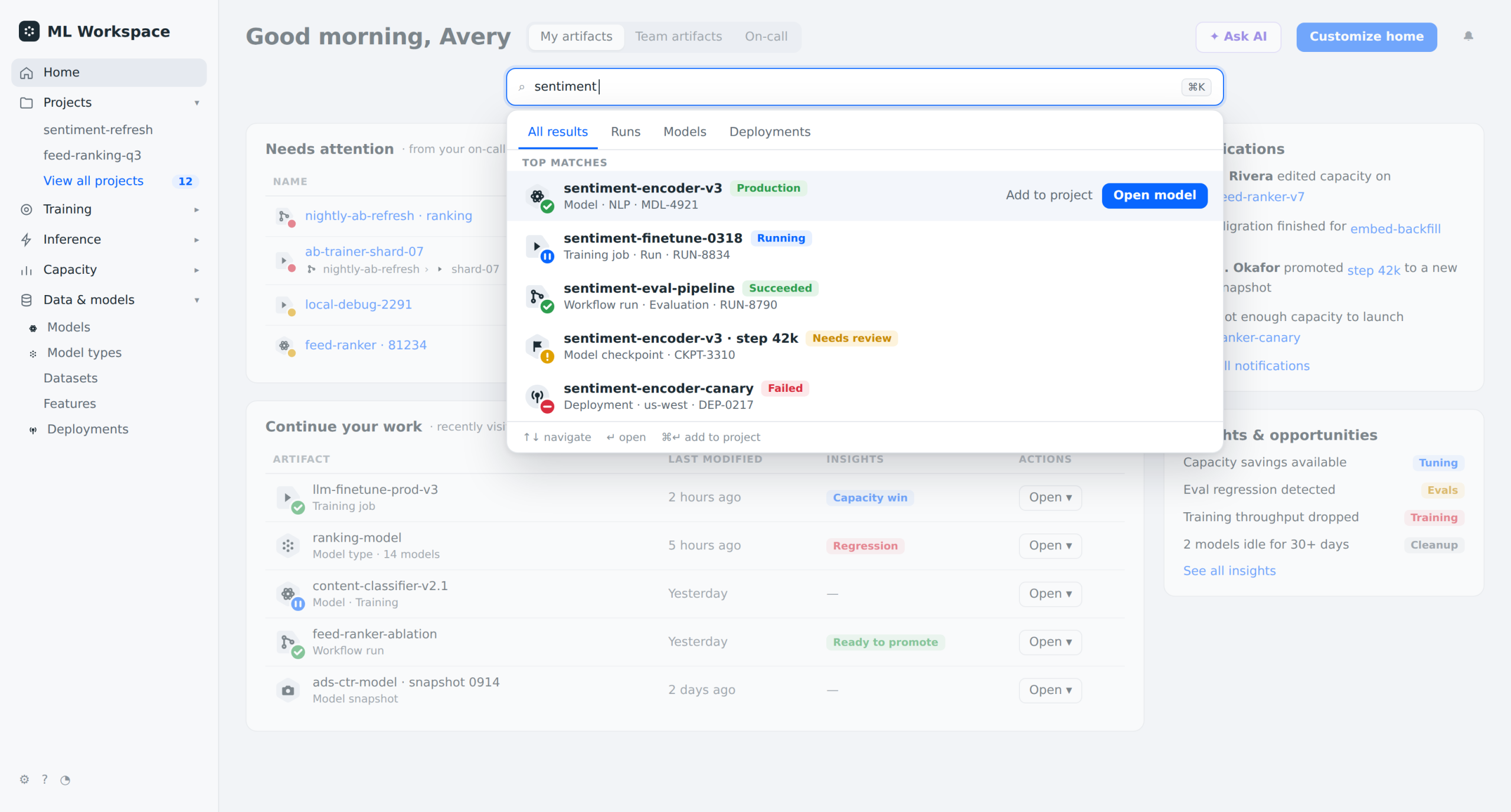
For more than five years at Meta, I designed AI and ML infrastructure tools across training and experimentation workflows, production model debugging, and reusable design systems. My work also included design-led improvements to product quality. These selected highlights show how I bring structure to complex technical workflows, work closely with engineering, and carry design decisions into the product.
The work also moved at product pace: for a technical configuration workflow, I led design across viewing, comparison, and editing on an aggressive schedule, working across teams and reusing components from the MLX system.
Selected highlights
(MLX) Design system
A shared language for AI/ ML artifacts
Challenge
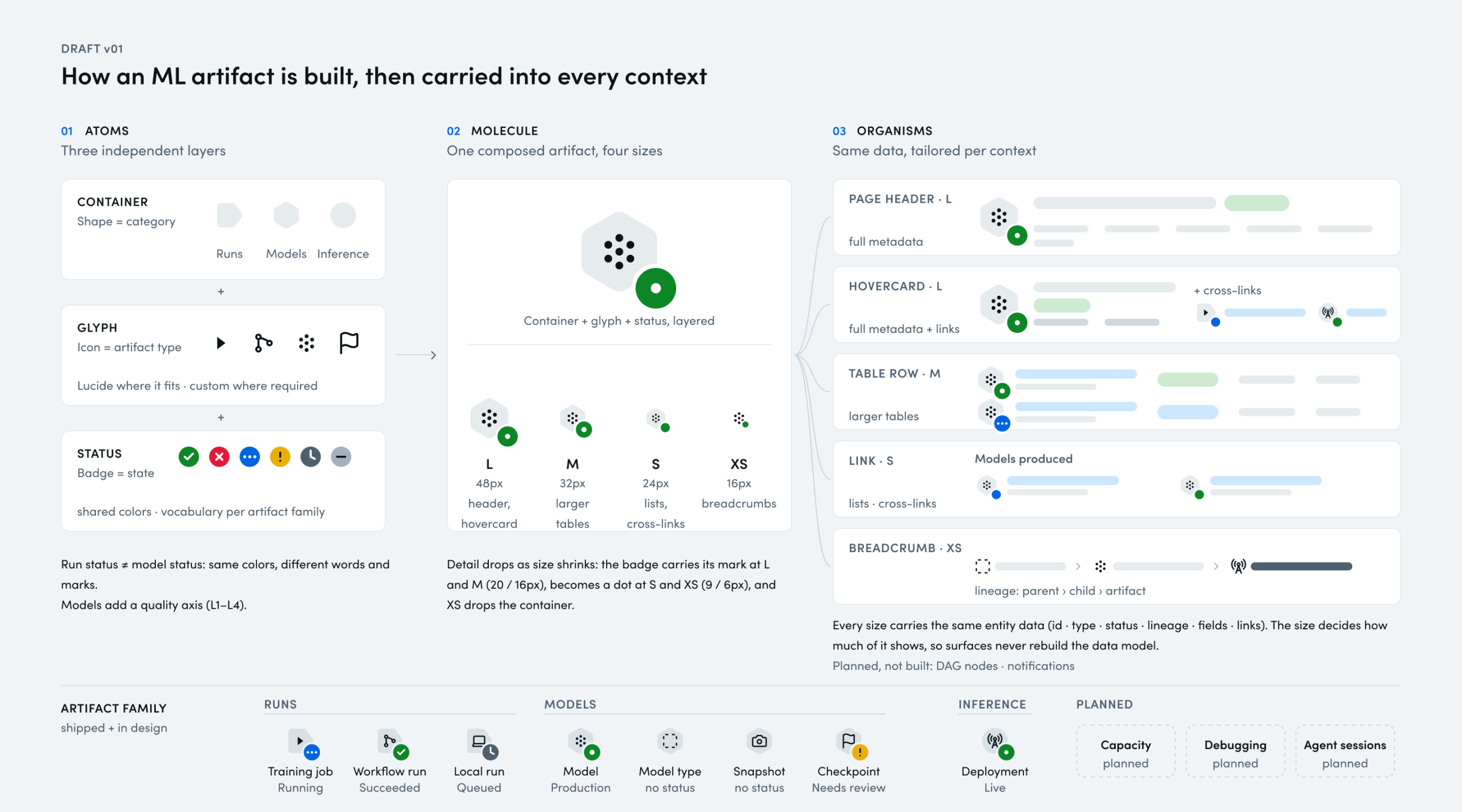
Models, runs, and other ML artifacts appeared in many tools, but their identities and states didn’t read consistently across contexts.
What I changed
Designed a reusable representation system: the visual building blocks, the information hierarchy behind them, and patterns that scale from compact lists to full detail views. Partnered with design engineering on the first set, then implemented later extensions myself.
Outcome
Started with a pilot artifact type and extended the system as needs emerged. Its components were later reused in fast-moving product work.
Product quality foundations
Turning design standards into shipped quality
Challenge
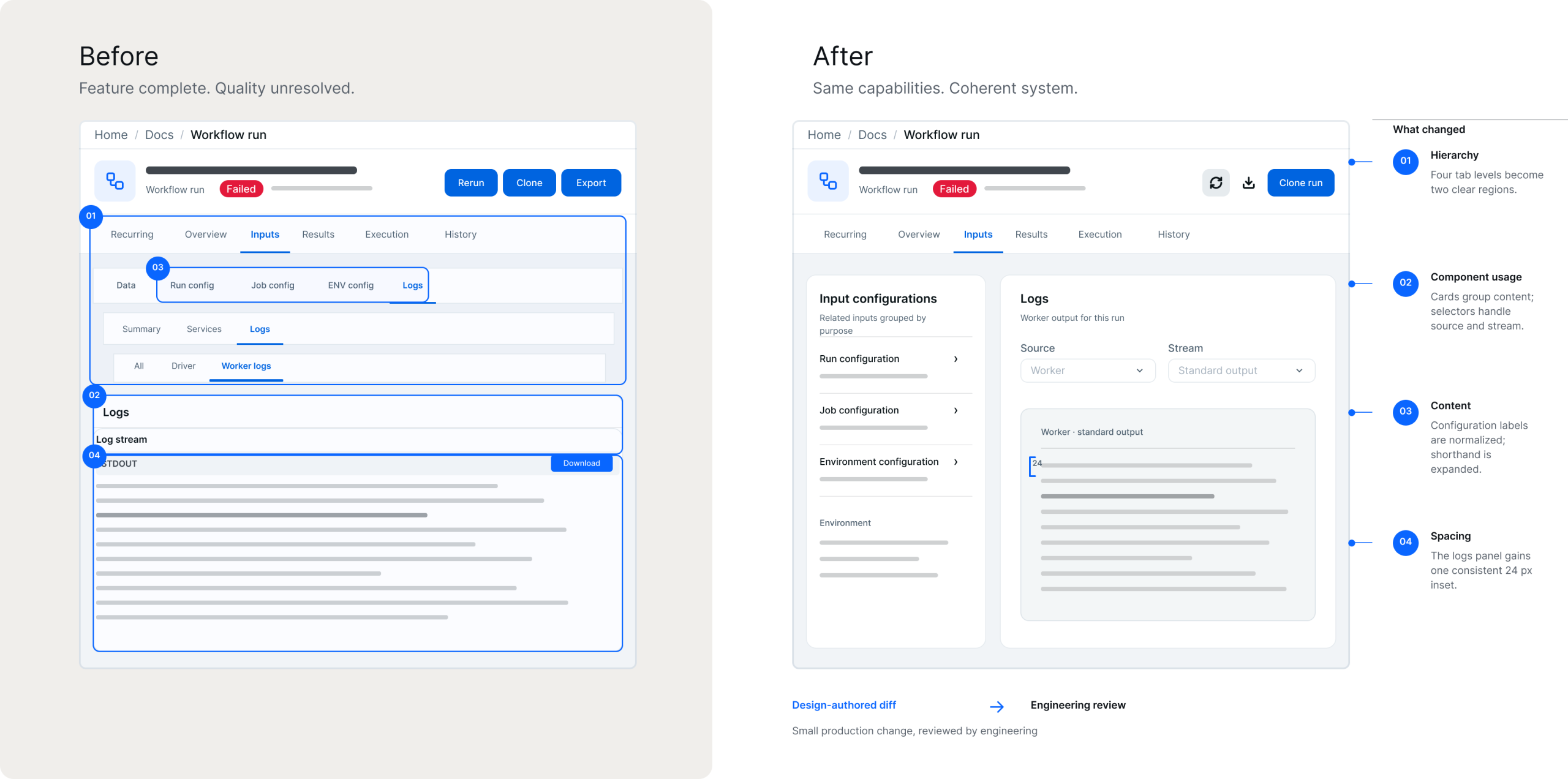
A growing ecosystem of ML tools had accumulated small inconsistencies and “paper-cuts” that were easy to defer and hard to fix one by one.
What I changed
As part of a small design-led Foundations effort, helped turn existing principles into an actionable quality process: find issues, prioritize, use AI-assisted coding for contained fixes, and review with engineers before production.
Outcome
Small production fixes shipped on owned surfaces; findings on customer-owned surfaces went to the owning teams.
Production model debugging
Making ML incidents easier to investigate
Inference debugging
When a production model broke, engineers pieced together evidence from a dozen disconnected tools, and the investigation often depended on whoever knew the system best. As founding designer of Inference Insights, I shaped a shared investigation model that let experts move fast and helped newer on-calls find the cause. Meta reported order-of-magnitude faster production debugging in its first two years.
The full case study covers the research, strategy, information architecture, and product / design decisions.
Case study • Meta
Inference Insights
What the work adds up to
Systems that make later work faster, higher quality and more delightful
Investing in shared structures meant new product work could reuse, not rebuild.
Design driven strategy and principles that reach production
Closing the gap between a standard and a shipped fix: engineering review, AI-assisted coding, owned vs. customer surfaces.
Clarity, usability and accessibility of dense technical workflows
Research and information architecture for expert and new users alike under pressure.
Dive deeper
Want the full story?
These are selected highlights from a broader body of product and systems work. I’m happy to walk through the process, trade-offs, and additional projects in a live portfolio presentation, where sharing is permitted.